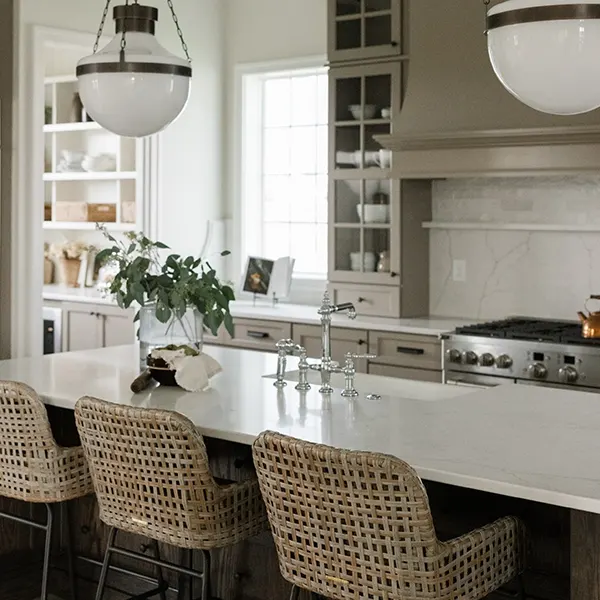
The layout of your kitchen is one of the most important decisions during a home renovation. A well-planned layout improves workflow, reduces unnecessary movement, and makes cooking much more enjoyable.
In Singapore homes, especially HDB flats and condos, kitchens are often compact. This means the layout must maximise both space and functionality.
Before choosing materials or cabinets, homeowners should first focus on the kitchen layout, since it forms the foundation of how the space will function. A layout that suits your cooking habits can make daily kitchen tasks easier, while an inefficient one can lead to constant back-and-forth movement when preparing meals.
Below are some of the most practical kitchen renovation layouts commonly used in Singapore homes.
The L-shaped kitchen is one of the most popular layouts for HDB flats and condos because it works well in both small and medium-sized kitchens.
This layout places cabinets and countertops along two connected walls, forming an “L” shape.
Benefits include:
Because the centre of the kitchen remains open, the L-shaped layout also allows homeowners to add features like a small island or dining counter if space permits.
The galley kitchen is a practical option for long and narrow kitchens often found in older HDB flats.
This layout uses two parallel countertops with a walkway between them, creating a compact and efficient cooking corridor.
Advantages of galley kitchens include:
However, homeowners should ensure the walkway is wide enough to allow comfortable movement while cooking.
In some compact homes, especially studio apartments or small condos, a one-wall kitchen may be the only practical option.
In this layout, all appliances, cabinets, and work surfaces are placed along a single wall.
Although it offers less counter space compared to other layouts, it can still function well for homeowners who cook less frequently.
To improve functionality, homeowners can add:
The U-shaped kitchen uses three connected walls of cabinetry and countertops, creating a “U” formation.
This layout provides more workspace and storage compared to other designs.
Advantages include:
However, U-shaped kitchens usually require a larger space, which means they are more commonly found in larger HDB units or private homes.
If the kitchen has enough space, adding an island or peninsula can greatly improve functionality.
An island can serve multiple purposes such as:
For smaller homes, a peninsula — a counter connected to one side of the kitchen — can provide similar benefits while taking up less space.
Kitchen islands and peninsulas also help define different areas in open-concept homes.
Regardless of the layout you choose, kitchen design should support a smooth workflow.
Many designers plan kitchens based on the “work triangle” concept, where the stove, sink, and refrigerator are positioned in a way that minimises unnecessary movement.
A good workflow ensures that:
Designing your kitchen around your cooking habits can make a big difference in daily usability.
Before finalising your kitchen renovation design, consider the following:
The size and shape of your kitchen space
How frequently you cook
The number of people using the kitchen
Whether you prefer open or closed kitchen concepts
Storage and countertop requirements
Discussing these factors with a renovation contractor or interior designer can help ensure your layout matches your lifestyle.
Compare renovation quotations from experienced renovation contractors to explore kitchen layouts, materials, and design ideas that suit your cooking habits and home layout.
L-shaped and galley kitchens are among the most common layouts because they work well in smaller HDB flats.
Galley kitchens and one-wall layouts are ideal for compact spaces because they maximise efficiency.
It depends on the available space. Some homeowners choose smaller islands or peninsulas to add extra workspace without overcrowding the kitchen.
It is a design concept that places the stove, sink, and refrigerator in a triangular arrangement to improve cooking efficiency.
Open kitchens create a spacious feel, while closed kitchens are better for containing cooking smells and heavy cooking.
Yes. The layout determines how the kitchen functions, while materials and finishes can be decided after the layout is finalised.

Built Just for #HDB Homes in Singapore