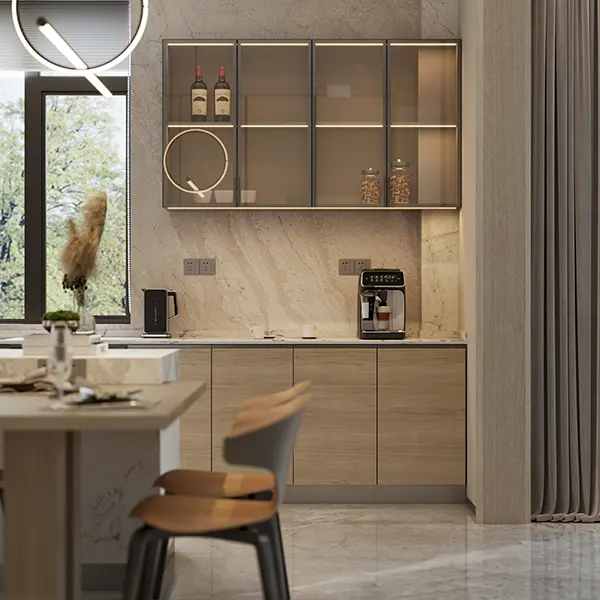
In many Singapore homes today, especially newer HDB flats and condominiums, homeowners are incorporating dry kitchens as part of their renovation plans. A dry kitchen is typically a secondary kitchen area used for food preparation, plating, and light cooking, while the main kitchen handles heavier cooking tasks.
This layout is becoming increasingly popular because it provides additional countertop space, better organisation, and a more social cooking environment. Dry kitchens are often placed near the dining or living area, allowing homeowners to prepare food while interacting with family members or guests.
If you are planning a renovation and want more usable kitchen space, here are some practical dry kitchen design ideas to consider.
A kitchen island is one of the most common features in dry kitchen designs. It provides extra countertop space that can be used for food preparation, baking, or serving meals.
Kitchen islands also create a natural gathering point in the home.
Benefits of a kitchen island include:
For smaller homes, a compact island can still provide significant functionality without overcrowding the space.
Another way to create a functional dry kitchen is by extending countertops along a wall.
This approach provides long, continuous preparation space while maintaining a clean and simple layout.
Homeowners often use these extended counters for:
Adding wall cabinets above the counter can also increase storage while keeping the area organised.
Open shelving is commonly used in dry kitchens because it allows frequently used items to be easily accessible.
Instead of storing everything behind closed cabinets, homeowners can place everyday items such as:
This design can also add visual interest to the space while keeping items within reach during food preparation.
However, it is best to balance open shelves with closed cabinets to avoid excessive dust accumulation.
Many homeowners turn part of their dry kitchen into a dedicated beverage station.
This area can include appliances such as:
Having a dedicated station keeps drinks separate from the main cooking area and makes it easier for guests to help themselves during gatherings.
Dry kitchens can also serve as a secondary storage area for pantry items.
Tall cabinets are useful for storing:
With proper organisation, pantry cabinets can reduce clutter in the main kitchen and make food preparation more efficient.
Some homeowners integrate the dry kitchen with the dining space to create a more open and social environment.
For example:
This layout works well for homeowners who enjoy entertaining guests at home.
While it may be tempting to add many design elements, dry kitchens often work best when they remain simple and practical.
A clean layout with sufficient counter space and organised storage can make the area more efficient.
Key priorities should include:
Adequate preparation space
Easy access to commonly used items
Good lighting for food preparation
Storage solutions that reduce clutter
With the right design choices, a dry kitchen can significantly improve the functionality of your home.
Speak with experienced renovation contractors and request renovation quotations to explore dry kitchen layouts, countertop options, and storage solutions that fit your space.
A dry kitchen is a secondary kitchen space used mainly for food preparation, plating, and light cooking, separate from the main cooking kitchen.
They provide additional countertop space, better organisation, and allow homeowners to interact with guests while preparing food.
Not necessarily. Even compact spaces can accommodate small dry kitchen setups with a countertop or beverage station.
Yes. Many homeowners include coffee machines, beverage refrigerators, or microwaves in their dry kitchen area.
No, but it is a popular feature because it provides extra preparation space and storage.
Durable materials such as quartz, granite, or solid surface countertops are commonly used because they are easy to maintain.

Built Just for #HDB Homes in Singapore