Modern lifestyles are changing how homeowners in Singapore use their living spaces. With hybrid work arrangements, growing families, and evolving daily routines, many people are looking for homes that can adapt to different needs over time.
Because of this shift, flexible layouts are becoming one of the most popular ideas in HDB renovation design. Instead of fixed-purpose rooms, homeowners are choosing layouts that allow spaces to transform depending on the situation.
Whether it’s creating a home office during the day or opening up the living area for entertaining guests, flexible design makes small homes feel more versatile and functional.
This guide explores flexible home layout ideas that are becoming increasingly popular in modern HDB renovations.
HDB flats are designed with efficient layouts, but homeowners often want more adaptability in how they use their space.
Flexible layouts help solve several common challenges, such as:
By designing spaces that can easily adapt, homeowners can make better use of every square metre in their home.
One of the most common ways to create a flexible layout is by using sliding partitions or movable walls.
These allow homeowners to divide spaces when privacy is needed and open them up when more room is required.
For example, a partition can separate the living room from a study area during work hours, then be opened in the evening to create a larger shared space.
Popular options include:
These solutions maintain openness while still providing the option for separation.
Instead of dedicating a room to just one function, many homeowners now design rooms that serve multiple purposes.
A spare bedroom can easily double as:
Using convertible furniture such as sofa beds or foldable desks allows the space to adapt throughout the day.
This approach is especially useful for 3-room and 4-room HDB flats where space is more limited.
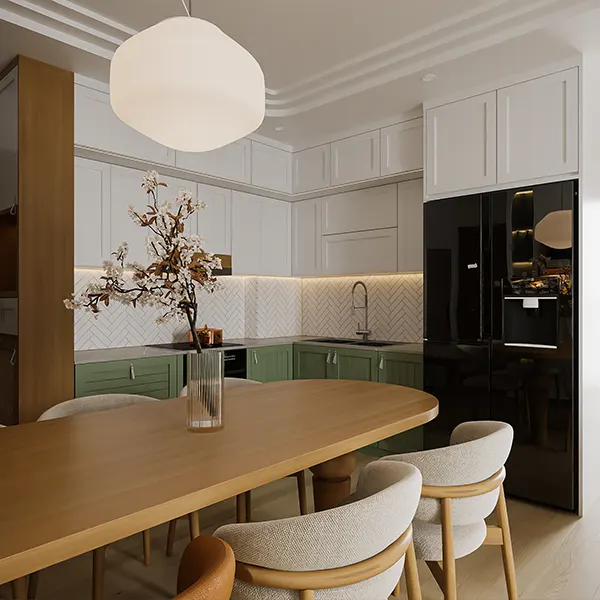
Open-concept layouts remain a popular renovation choice because they create a more spacious feel.
By combining the living room, dining area, and kitchen into a single open space, homeowners can make their homes feel brighter and less confined.
Benefits of open layouts include:
Some homeowners also incorporate kitchen islands or dining counters to subtly define areas without closing them off.
Built-in carpentry can also be designed to support flexible living.
Examples include:
These solutions maximise storage while allowing rooms to change functions easily.
Another reason flexible layouts are gaining popularity is the desire to future-proof homes.
Lifestyle needs can change over time. A study room today may later become a nursery or a guest bedroom.
By avoiding overly rigid layouts, homeowners can adapt their homes without needing major renovation work later.
Flexible design ensures that the home continues to meet the needs of the household for many years.
If you are planning a renovation with flexibility in mind, consider these tips:
Avoid excessive permanent partitions
Use sliding or movable dividers instead of fixed walls
Plan multi-purpose furniture
Ensure electrical points are placed strategically
Leave room for future layout adjustments
Working with an experienced renovation contractor can help you identify layout options that balance flexibility with functionality.
Speak with experienced renovation contractors and compare renovation quotations to explore flexible design ideas that maximise your home’s space and usability.
A flexible layout allows rooms or spaces to serve multiple functions and adapt to different needs over time.
Yes. Flexible layouts are especially useful for smaller flats because they maximise the usability of limited space.
Sliding partitions, multi-purpose rooms, convertible furniture, and open layouts are commonly used.
Not necessarily. Some solutions such as movable partitions or modular furniture can be affordable compared to major structural changes.
Yes. Open layouts allow homeowners to adjust furniture arrangements and usage more easily.
Yes. Planning flexibility early ensures electrical points, lighting, and carpentry are designed to support multiple uses.

Built Just for #HDB Homes in Singapore